Your starting point
Begin with access around the bed, light you can control from bed, and a place for the objects you use every night. Then build a palette from the bedding or furniture you are keeping. Calm comes from fewer unresolved jobs, not from buying a matching bedroom set.
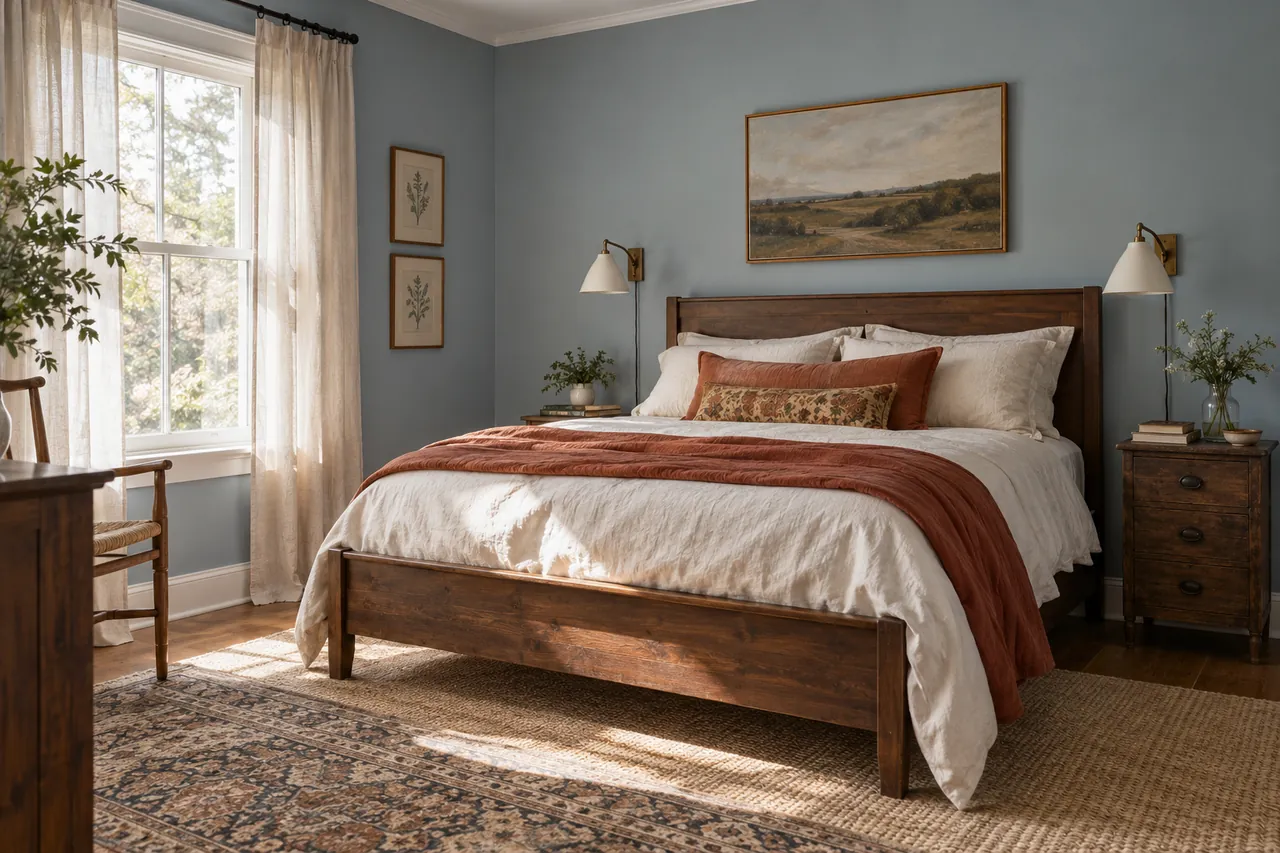
Plan around the bed you actually need
Measure the bed frame, not just the mattress. Upholstered frames, footboards, and projecting legs all use space. Add the travel of drawers and wardrobe doors to your plan. If two people share the room, test whether both can get in and out comfortably rather than placing all the storage on one person’s side.
A smaller bedside table often helps more than a smaller bed. Test a wall-mounted shelf where fixings are permitted, or a narrow stool with a stable top. A piece that only holds a lamp and a phone does not need to be the width of a chest of drawers. Preserve usable routes instead of forcing symmetry.
Use the small-bedroom storage guide if wardrobes and daily clothing are the main constraint.
Give the bedside three useful layers
Separate the task of reading from the task of softly lighting the room. Put a reading source where it lights the page without shining into the other person’s eyes. Keep the switch reachable from your normal position. A bedside lamp that looks good in a photograph but requires getting out of bed to switch off is a poor fit for this job.
Compare bulb brightness in lumens and light color in kelvin. The Department of Energy distinguishes these from watts, which measure power. Around 2700–3000 K is a warm starting range for domestic evening light; your preferences and visual tasks may call for something different. Confirm lamp, bulb, dimmer, and shade compatibility.
Give small daily items a contained landing place: a shallow tray for glasses, a drawer for cables, and a reachable surface for water. Route cables so they do not trail across a path. Choose plug-in fixtures for an easy refresh; use a qualified professional for electrical alterations.
Build a palette from fixed things
Start with the floor and largest piece of wood furniture. Put your proposed wall color beside those finishes, then add one main textile color and one smaller accent. A chalk blue, dark wood, and rust combination can feel grounded because the pale field leaves the darker furniture clear and the warmer textile adds contrast. It is one option, not a universal recipe.
Use texture where you want variety without more color. A smooth cotton sheet, a quilted cover, and a coarse woven cushion can create interest inside a restrained palette. Keep bed styling proportionate to your tolerance for moving pillows twice a day.
| If you want… | Try… | Check… |
|---|---|---|
| A light, quiet room | Pale walls, similar-toned bedding, one dark anchor | Whether the pale colors turn gray in your light |
| A cocooning room | Deeper walls and layered local lighting | Reading light and contrast around walking routes |
| A collected room | One vintage piece, mixed wood, a repeated textile tone | Usable storage and bedside height before styling |
Control the window before adding accessories
Decide separately how much privacy and light control you need. A sheer layer can soften daylight but will not reliably provide nighttime privacy. Blackout performance depends on fabric, lining, and light leakage around the edges, not just a product name. Try the window at the time of day the room bothers you.
Keep curtain length practical around radiators, heaters, furniture, and routes. Follow the relevant product clearances. Where children may be present, use cordless window coverings and keep beds and climbable furniture away from accessible cords; CPSC identifies window-covering cords as a serious hazard.
If you cannot install a new fitting in a rental, improve the permitted existing treatment first. Do not assume adhesive or tension hardware is suitable for every surface or load.
Spend in the order you feel the room
Prioritize the things you touch and use: bedding comfort, a useful light, and storage that closes properly. A rug can be lovely under bare feet, but bedside runners may solve the cold-floor problem with less material than a large rug under the whole bed. Verify that drawers still open and rug edges lie flat.
For an existing bedroom, try a no-purchase reset: clear the top of the dresser, move seldom-used objects elsewhere, and remove one piece of furniture that makes changing the bedding awkward. Photograph the room from the doorway. That view often reveals visual congestion you no longer notice.
Reserve decorative art until you know where the bed and lights belong. Choose secure fixings suited to the wall and object; do not rely on appearance alone when positioning a heavy item near a bed.
Your practical checklist
Tick these as you go. Choices are saved in this browser when storage is available.
Common questions
Do bedside tables have to match?
No. Similar usable surface heights and a repeated color or material can connect different pieces. Check each person’s storage and reach needs.
Can a small bedroom use dark walls?
Yes, if that suits your preferred atmosphere. Test the color with the actual light and use contrast where it helps you find edges and objects.
What makes a bedroom feel finished?
A coherent palette, practical bedside arrangements, controlled window light, and a place for everyday clutter generally do more than extra ornaments.
Sources & editorial approach
- U.S. Department of Energy: Purchasing Energy-Efficient Light Bulbs — Definitions of lumens, watts, and correlated color temperature. We use these stable definitions, not the page's historical prices or purchasing-program details.
- U.S. Consumer Product Safety Commission: Go Cordless — Window-covering cord hazards and choosing cordless coverings where children may be present.
Source links reviewed October 3, 2026. Advice and examples are our editorial synthesis; dimensions are starting points, not universal requirements. How we create our guides.